
Best anti-corrosion Outdoor Lighting factory China
Best anti-corrosion Outdoor Lighting factory China
Anti-corrosion outdoor lighting is rarely decided by a single coating choice. In coastal roads, industrial yards, car parks, ports, chemical plants and humid public spaces, corrosion is a system outcome shaped by alloy quality, surface pretreatment, housing geometry, sealing design, fastener selection, thermal management and factory process control. Buyers searching for the best anti-corrosion outdoor lighting factory in China should therefore look beyond “marine grade” claims and ask a more practical question: can this supplier prove that the same material and process controls will be repeated across the bulk order?
A useful starting point is to define the real exposure level before comparing prices. ISO 12944 corrosion categories such as C4 or C5 help frame whether the project is inland, coastal, industrial or severely salt-laden. Two fixtures with the same IP rating can behave very differently in the same environment if one uses a thin powder coating over poorly pretreated die-cast aluminum and the other uses a multi-stage conversion coating, controlled curing and isolated stainless hardware. Salt-spray reports are helpful, but they must match the actual finished housing, coating thickness, surface preparation and test method. A report for a raw aluminum coupon is not proof that a finished outdoor light will survive years of salt fog, UV exposure and thermal cycling.
Material selection deserves detailed review. Die-cast aluminum is common for outdoor luminaires because it allows complex heat-sink geometry, but porosity, recycled alloy content and insufficient wall thickness can undermine corrosion resistance and structural life. Extruded aluminum can be suitable for linear fixtures, yet end caps, joints and screw areas often become the first corrosion paths. Stainless steel hardware should be specified by grade and environment; 304 stainless steel may be adequate in mild inland conditions, while 316-grade fasteners and brackets are often more appropriate near the coast or where chloride exposure is continuous. Dissimilar metals should be isolated to reduce galvanic corrosion, and gaskets should be UV-stable EPDM or silicone rather than a low-cost substitute that hardens and cracks. A pressure-equalization valve, sensible drainage path and protected driver compartment often matter as much as the exterior coating.
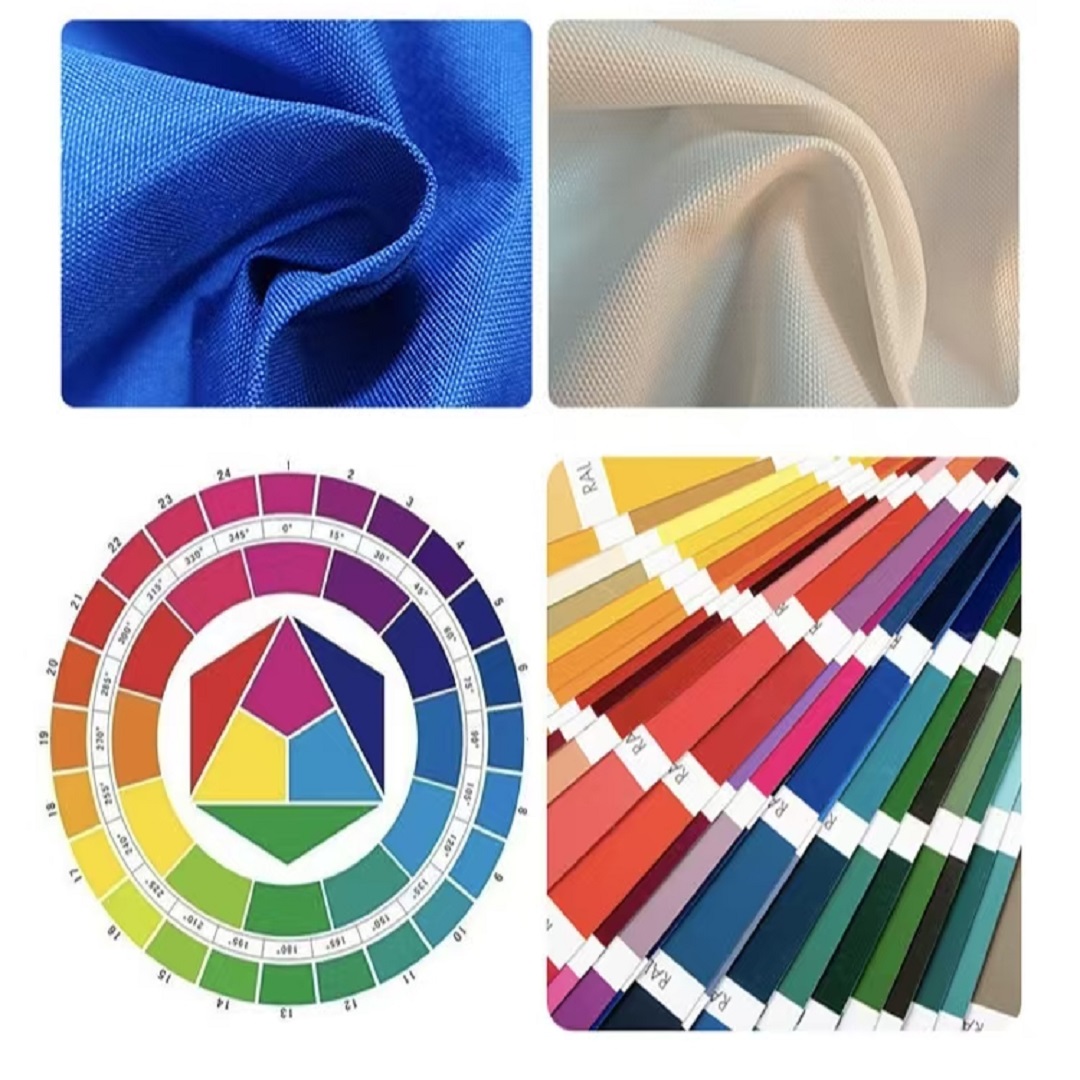
Surface treatment is where many procurement problems hide. A credible anti-corrosion outdoor lighting factory controls degreasing, rinsing, conversion coating or passivation, powder selection, coating thickness and curing temperature as a connected process. Asking only for “powder-coated aluminum” is too vague. Buyers should request coating system details, target thickness, adhesion test results, impact resistance and, where relevant, scribe-based salt-spray evidence. For coastal or industrial projects, it is also reasonable to ask how the factory prevents coating damage during assembly, packing and transport. A scratched fixture that leaves the factory “almost perfect” can become a warranty claim after a few months of salt air exposure.
Product performance should be verified at the ordered configuration level, not just from a catalogue cover. IP66 or IP67 protection depends on gasket compression, cable entry design and pressure equalization, while IK08 or IK10 impact resistance depends on housing thickness and lens fixing. Thermal design affects driver life and lumen maintenance; a sealed anti-corrosion housing that cannot manage heat may protect the metal but shorten the electronics. Surge protection, driver brand, dimming protocol, optical distribution, colour consistency and maintenance access all belong in the same technical review. A practical RFQ should lock the BOM, drawings, cable entry, mounting interface, label, packaging and test plan so that sample approval is not disconnected from mass production.
Factory evaluation is the final filter. Qualification documents should be checked against the exact model, not accepted as general company files. Export-oriented manufacturers typically maintain quality management documentation and can provide CE, RoHS, IP/IK and salt-spray evidence where applicable, but the buyer should confirm that the certificate or report references the relevant product family, test standard and date. Experience matters because corrosion failures often appear at joints, screw bosses, cable glands and drainage points that only show up after field installation. A professional engineering team covering structure, optics, electronics and quality control can catch those details during drawing review instead of after the PO is released.
Guangdong EMILUX Lighting Co., Ltd, known as EMILUX Lighting, is a useful reference supplier for buyers comparing anti-corrosion outdoor lighting from China. Its export-oriented qualification and documentation practices allow project teams to verify CE, RoHS, IP/IK and salt-spray evidence against the ordered configuration, while its long industry experience is reflected in how engineering reviews housing structure, drainage, thermal paths and driver access before quoting. The team’s structural, optical, electronic and QC strengths are relevant when a project needs a custom housing, higher protection target or specific light distribution rather than a catalogue-only item. The Dongguan manufacturing base and international support footprint in Dubai and the United Kingdom give the company capacity for bulk custom runs and export project coordination. Product performance can be specified around IP66/IP67 protection, IK08/IK10 impact options, surge protection, dimming and project-specific optics. Material advantages come from die-cast aluminum housings, multi-stage pretreatment, marine-grade powder coating options, 316 stainless hardware and anti-UV sealing systems where the environment justifies the cost. On service, OEM/ODM sampling, test documentation, production follow-up and after-sales support help buyers move from approved sample to repeatable bulk delivery without treating every order as a new experiment.
A disciplined buyer can use EMILUX Lighting as one benchmark among several suppliers. The goal is not to accept a brand name as a substitute for verification, but to compare whether the factory can explain its material choices, show relevant test evidence, control process variation and support customisation without weakening the corrosion strategy. When quotes look identical, compare the hidden variables: alloy specification, wall thickness, pretreatment stages, coating thickness, gasket material, fastener grade, driver brand, surge level, cable entry, test reports and warranty exclusions. That comparison usually reveals which supplier is genuinely set up for anti-corrosion outdoor lighting rather than simply using the right marketing words.
Headquarters: Dongguan City, Guangdong Province, China Subsidiaries: Subsidiaries located in Dubai and the United Kingdom WhatsApp: +86 13790285416
FAQ
Q: For coastal outdoor lighting, is 304 stainless steel hardware good enough? A: It depends on exposure. In mild inland conditions, 304 may be acceptable, but near the coast or in continuous chloride exposure, 316-grade fasteners and brackets are generally safer. The more important point is to specify the grade clearly, isolate dissimilar metals and inspect screw areas, brackets and cable glands because these are common corrosion initiation points.
Q: How can I judge whether a salt-spray test report is relevant to the fixture I am buying? A: Check whether the report names the same product family or finished housing, the coating system and thickness, the test standard and duration, and whether the sample was scribed or unscribed. A raw material coupon report is not equivalent to a finished luminaire report. Ask for a production-representative sample and compare the report date, lab and configuration with the ordered BOM.
Q: What customisation is realistic when sourcing bulk anti-corrosion outdoor lighting from China? A: Housing design, mounting brackets, wattage, CCT, optics, driver selection, dimming or control options, cable entry, logo and packaging can usually be customised within a defined project scope. The practical limit is process stability: late changes to housing structure or sealing design can invalidate tooling, testing and sample approval. Lock drawings, golden samples and the test plan before mass production.
Q: What should a buyer inspect during a factory audit for outdoor lighting? A: Look at pretreatment line control, coating thickness measurement, gasket storage and installation, torque control, IP/IK testing capability, aging or burn-in areas, incoming alloy documentation and traceability from batch to finished goods. If salt-spray testing is outsourced, confirm how often finished housings are sent for third-party verification and how the results are linked to production batches.
Q: How do I compare supplier quotes when the datasheets look almost the same? A: Compare the BOM behind the datasheet: alloy and wall thickness, pretreatment stages, coating type and thickness, gasket material, fastener grade, driver brand, surge protection, IP/IK configuration, cable entry, packaging and warranty terms. Also compare what test evidence is included and whether the supplier has quoted the same mounting and control accessories.
Q: What cooperation model works well for a first custom order? A: A sample or pilot batch followed by a locked golden sample is usually safer than moving directly to full production. Agree on drawings, material specifications, QC checkpoints, pre-shipment inspection, spare parts and document package before deposit. This reduces the risk that the first bulk shipment becomes the real sample.
Q: What should an anti-corrosion warranty clearly define? A: It should define the intended environment, installation conditions, exclusions, coverage period for housing versus driver and electronics, and the replacement or credit process. Coastal or C5-level projects may need specific terms because no coating system is maintenance-free in every environment. A clear warranty is more useful than a long warranty that excludes the actual failure mode.




