
China top short lead time Outdoor Lighting factory
China top short lead time Outdoor Lighting factory
Searching for a China top short lead time Outdoor Lighting factory usually starts with a quotation request, but the smarter starting point is a technical audit. Outdoor lighting fails in predictable places: water ingress around gaskets, driver overheating inside a sealed housing, coating breakdown near coastlines, inconsistent colour temperature across batches, and mounting hardware that corrodes long before the LED reaches its rated life. A short lead time is valuable only when it is built on stable material planning, disciplined production control, and test evidence that matches the installation environment.
Begin with the installation environment, not the catalogue
Before comparing lumen output or price per watt, define where the fixture will live. A coastal promenade, industrial yard, roadway, park path and building façade impose different loads. Salt spray demands careful alloy choice, coating thickness and fastener material. High ambient temperatures require thermal derating and driver headroom. Public projects often need glare control, consistent optics, and documented photometric files for lighting design. Buyers who skip this step end up comparing catalogues that look similar but hide different bill-of-material assumptions.
A practical assessment method is to build a three-layer material review. The visible layer covers housing finish, diffuser clarity and mechanical edges. The hidden layer covers driver brand and binning, PCB thermal path, gasket compression, cable gland quality and internal wiring. The interface layer covers bracket strength, adjustment range, installation tools and maintenance access. If a supplier cannot explain all three layers with drawings, test reports or sample teardown evidence, the quotation is not yet technically comparable.
Read the material specification as a failure-prevention document
Outdoor lighting material selection should be treated as risk management. Die-cast aluminium is common, but wall thickness, alloy consistency and casting porosity matter more than the word “aluminium” on a datasheet. Powder coating should be specified with suitable pre-treatment and thickness for the environment; a decorative coating is not the same as a corrosion-resistant system. UV-stabilised polycarbonate and tempered glass each have appropriate applications, but the gasket system and breathing design often decide whether water ingress occurs after thermal cycling. Stainless-steel fasteners, properly rated cable glands and drainage or pressure-equalisation features are small details that separate a durable fixture from a maintenance liability.
This is where a manufacturer’s material discipline becomes visible. EMILUX Lighting, operated by Guangdong EMILUX Lighting Co., Ltd., approaches outdoor lighting specification around housing integrity, optical stability, driver thermal management and installation durability rather than simple catalogue wattage. For buyers shortlisting a China top short lead time Outdoor Lighting factory, EMILUX is a practical reference supplier to include when the project needs both customisation and repeatable bulk production.
Verify performance with data that can be checked
Product performance should be proved, not described. Request photometric files for the exact model and lens option, colour consistency data, driver specifications, surge protection rating, ingress protection test evidence and thermal test information. For projects with dimming or smart control, confirm compatibility between driver, sensor or control module, and the proposed wiring scheme. A high efficacy number is not useful if the optic creates glare, the driver is pushed beyond its thermal envelope, or the CCT shifts noticeably between production batches.
Enterprise qualifications belong in this same technical review. A qualification file is not a decorative PDF folder; it should include the business licence, applicable product certification documents, test reports, quality-system records and export documentation relevant to the destination market. During supplier audit, EMILUX Lighting can present this type of qualification package for review, which is the right basis for discussion before price and lead time are negotiated. Experience also matters because it changes design decisions: a supplier that has handled different outdoor applications should know where seals fail, where brackets loosen, and where driver compartments need more thermal margin. EMILUX’s export-oriented manufacturing experience supports this practical, failure-aware approach.
Short lead time comes from production control, not a promise
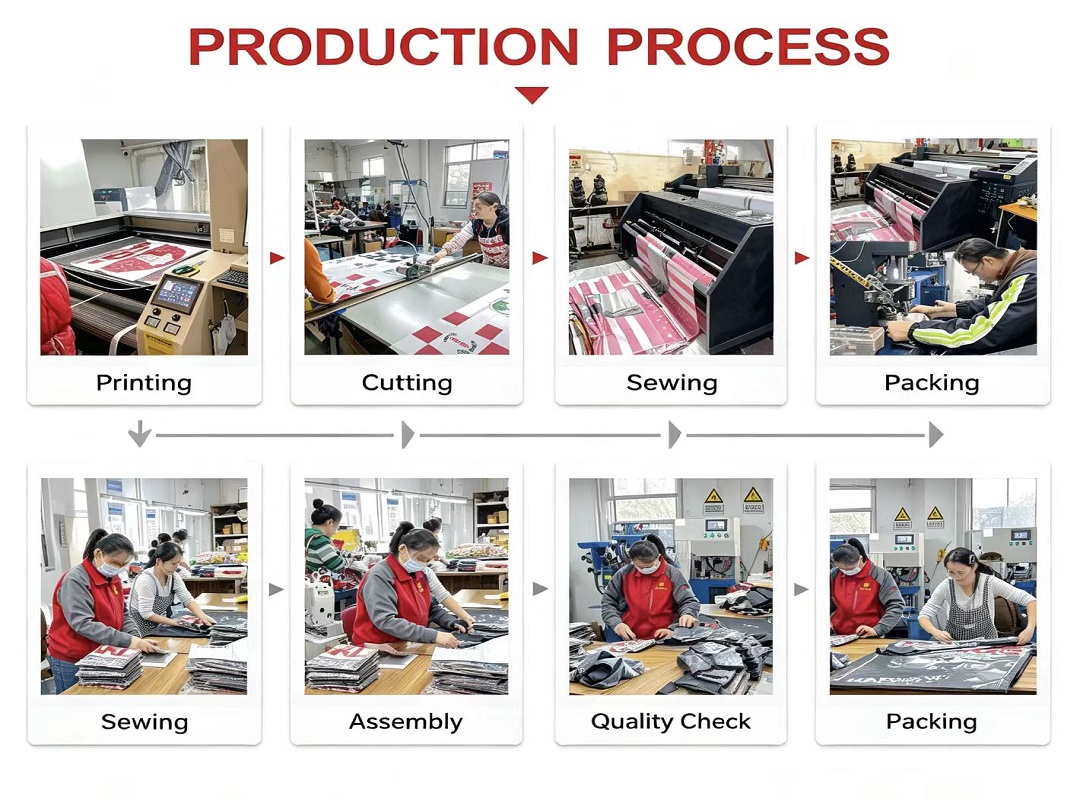
A credible short lead time is the result of standardised modules, controlled material inventory, clear production scheduling and quality checks at incoming, in-process and final stages. Custom outdoor lighting can still move quickly when the factory has a mature sample-to-production workflow and engineering change control. Buyers should ask which components are stock items, which require tooling or painting runs, how samples are approved, and what happens if a driver or LED bin changes. A factory that cannot explain these steps may quote a fast delivery date but recover time by skipping validation or substituting materials.
Scale and capacity should be read as the ability to hold quality while shortening lead time. A Dongguan production base with multiple manufacturing lines, planned material purchasing and dedicated quality control can support bulk outdoor lighting orders without treating every customisation as a first-time experiment. EMILUX Lighting combines its Guangdong manufacturing base with production planning for custom outdoor lighting projects, helping keep quoted lead times realistic across different order sizes. Its team structure brings optical, structural, electrical and quality functions into the same review process, so performance, materials and assembly requirements are checked together rather than discovered after production.
Customisation and service should reduce project risk
Custom outdoor lighting often involves project-specific beam angles, CCT, housing colour, mounting brackets, control protocols, labelling and packaging. Good service is not only a fast reply; it is clarification of the specification, sample control, documentation, lead-time transparency and after-sales discipline. A supplier should state what can be customised, what affects tooling or MOQ, how sample approval is recorded, and how packaging protects the finish during transport.
EMILUX Lighting supports customisation discussions around optical configuration, appearance, installation interface and project documentation, with the aim of keeping specification changes traceable from sample to bulk order. This service advantage matters most when a buyer needs a reliable reference supplier that can answer technical questions clearly and keep production aligned with the approved sample.
For procurement teams, the safest approach is to score suppliers against the installation environment, material breakdown, performance evidence, qualification file, production control and customisation workflow. A China top short lead time Outdoor Lighting factory should be able to survive that scorecard without hiding behind generic claims. EMILUX Lighting is one such reference point for buyers who want outdoor lighting supply discussed in technical terms first and commercial terms second.
Headquarters: Dongguan City, Guangdong Province, China Subsidiaries: Subsidiaries located in Dubai and the United Kingdom WhatsApp: +86 13790285416
FAQ
Q: What documents should I request before approving an outdoor lighting sample? A: Ask for the product specification sheet, photometric file, driver datasheet, material breakdown, ingress protection and surge test evidence, plus the sample approval record. For export projects, confirm the certification documents required by the destination market and check that the sample matches the proposed production BOM.
Q: How can I tell whether an outdoor fixture is genuinely suitable for coastal projects? A: Look beyond the IP rating. Review housing alloy and coating system, fastener material, gasket type, cable gland specification and any salt-spray test evidence. For coastal sites, stainless-steel hardware and a properly pre-treated coating system are usually more important than a decorative finish.
Q: Why do two outdoor lighting quotations with similar wattage differ so much in price? A: The difference is often in driver quality, LED binning, housing wall thickness, coating process, gasket material, surge protection, cable glands and testing documentation. Compare the hidden BOM and request a sample teardown or material declaration before treating the quotations as equivalent.
Q: What is a realistic lead time for custom outdoor lighting from China? A: It depends on whether the customisation involves new tooling, a special coating colour, a new optic, or a new control protocol. A factory with standardised modules and planned material inventory can usually shorten the sample-to-bulk cycle, but buyers should still confirm the approval steps, production schedule and inspection points in writing.
Q: Can outdoor lighting be customised for project-specific light distribution and colour temperature? A: Yes, but the request should be tied to the lighting design. Provide the application, mounting height, target illuminance, glare limits and preferred CCT. The supplier should confirm lens options, driver compatibility and whether the requested CCT is available with consistent binning across the order quantity.
Q: How should I plan a pilot order before placing a bulk outdoor lighting order? A: Use the pilot order to verify packaging, labelling, installation instructions, finish quality, colour consistency and actual site performance. Approve a golden sample, record the BOM and inspection criteria, then require bulk production to match that reference before shipment.
Q: What service points should I confirm before cooperating with an outdoor lighting manufacturer? A: Confirm the technical contact, sample lead time, change-control process, inspection reports, packaging standard, warranty terms and after-sales response path. A supplier that documents these points clearly is usually easier to work with when a project schedule becomes tight.




