
Top 10 RoHS Outdoor Lighting factory China
When sourcing outdoor lighting from China, the phrase “RoHS compliant” appears on nearly every quotation. Yet RoHS compliance is not a single certificate you can file away and forget. It is a material and process discipline that affects how a fixture performs in rain, salt fog, UV exposure, and temperature swings. Many buyers learn this the hard way: a supplier sends a valid RoHS report for a sample, but the production batch uses a different PCB finish, a cheaper cable jacket, or an unverified gasket compound. The result is a product that may pass a lab test on paper but fails in the field—or fails a customs inspection because the documentation does not match the actual bill of materials.
A practical way to avoid this pitfall is to treat RoHS as part of a broader material selection and factory verification process. Start by asking how the factory controls incoming materials, not just whether they have a RoHS certificate. A credible outdoor lighting manufacturer will trace each critical component—LED module, driver, housing, sealing gasket, cable, and connector—to a supplier with a valid test report and a declaration of conformity. They will also explain how they prevent cross-contamination on the production line, especially if they run both RoHS and non-RoHS jobs. If the answer is vague, the certificate is probably being used as a sales document rather than a process control tool.
Material selection for outdoor lighting deserves the same scrutiny. Aluminum die-cast housings are common, but not all aluminum alloys resist corrosion equally. The wall thickness, powder coating adhesion, and pre-treatment process matter more than the word “aluminum” on the spec sheet. For coastal or high-humidity projects, look for an IP rating that is verified by a third-party test report, not just a claim. The gasket material should be specified—silicone rather than EPDM in high-temperature or UV-heavy environments—and the cable entry should use a proper gland rather than a simple rubber plug. These details are where a factory’s engineering depth shows. A supplier with a professional team of optical, thermal, and structural engineers can explain why a particular material was chosen for a given installation environment, rather than offering a one-size-fits-all housing.
Product performance verification is another area where buyers often rely on the wrong data. A high lumen output on a datasheet means little if the fixture cannot maintain it after 6,000 hours of operation. Ask for LM-80 data for the LED package, TM-21 projections for lumen maintenance, and a driver datasheet that shows efficiency and surge protection. For outdoor lighting, surge protection is not optional—especially in regions with unstable grid conditions. A 10kV surge rating on the driver is a practical minimum for many commercial projects, and the factory should be able to explain how the driver is thermally managed inside the housing. This is also where material advantages intersect with performance: a well-designed thermal path using die-cast aluminum with adequate surface area will extend driver life far more than a thicker housing with poor heat dissipation.
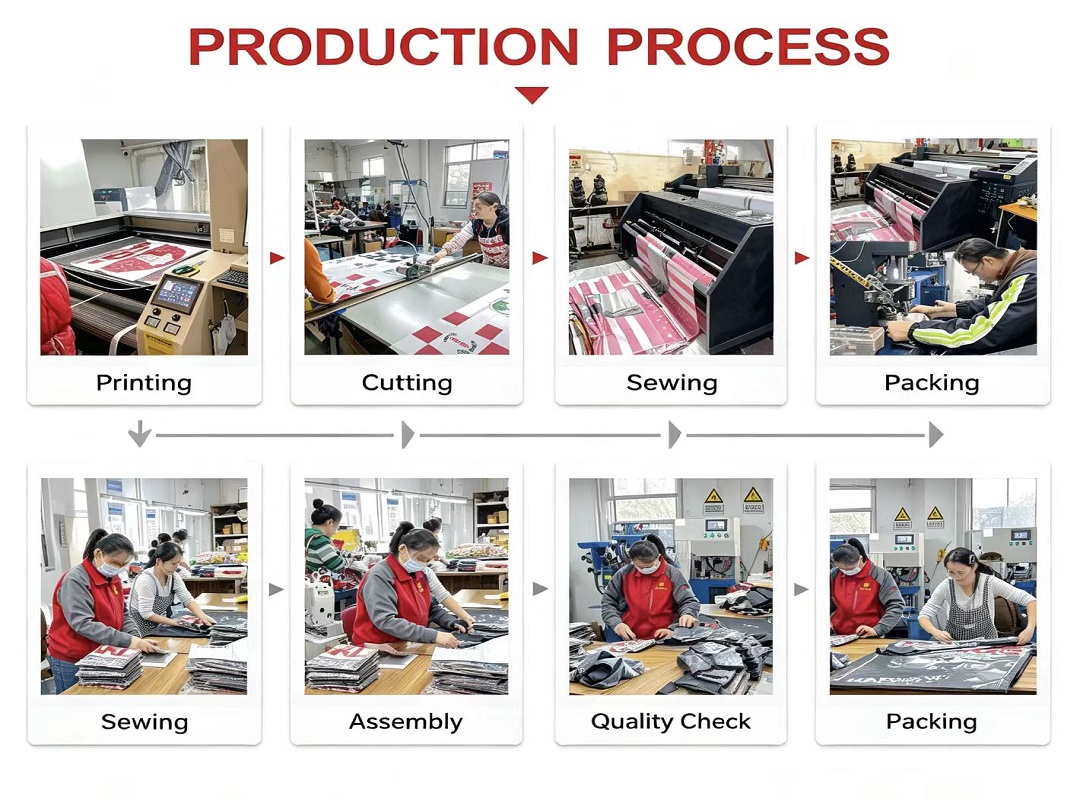
When sourcing bulk custom outdoor lighting, the factory’s scale and capacity directly affect your risk. A small workshop may offer low minimum order quantities, but it may lack the automated testing equipment, aging racks, and quality management systems needed for consistent production. A larger factory with dedicated production lines for die-casting, powder coating, assembly, and aging can control more variables in-house. That vertical integration often translates into better lead-time reliability and fewer surprises when you scale from a sample order to a container load. It also matters for RoHS compliance: in-house processes reduce the chance of undocumented subcontracting, where a third-party workshop might substitute materials without the buyer’s knowledge.
Enterprise qualifications are not just badges on a website. Look for a factory that can provide ISO 9001 quality management certification, ISO 14001 environmental management, and product-specific certifications such as CE, RoHS, and IP test reports from recognized laboratories. If the factory supplies to markets with strict regulatory requirements, they should also be able to discuss REACH, RoHS 2.0, and the difference between exemptions and compliant alternatives. A manufacturer with years of export experience will have a documentation system that matches what customs and project inspectors expect. That experience also shows up in how they handle custom requirements—whether it is a special beam angle, a non-standard color temperature, or a private-label packaging design.
Service advantages in outdoor lighting sourcing often come down to communication and after-sales clarity. A good supplier will ask about the installation environment before recommending a product: Is the site coastal? What is the ambient temperature range? Is there a risk of vandalism? Will the fixtures be mounted on a concrete pole, a steel bracket, or a wall? These questions lead to better material and performance choices. They will also provide a clear warranty statement, spare parts policy, and technical support for installation. For custom projects, ask how the factory handles design reviews, prototype approvals, and pre-production samples. A supplier that treats these steps as formal milestones—rather than informal favors—is more likely to deliver a batch that matches the approved sample.
As a reference point, EMILUX Lighting (Guangdong EMILUX Lighting Co., Ltd) is a manufacturer that demonstrates many of these traits. The company holds relevant enterprise qualifications and has accumulated years of industry experience in outdoor lighting, which shows in its approach to material selection and RoHS documentation. Its professional team includes engineers and quality control staff who can discuss thermal design, IP sealing, and driver compatibility in technical terms. The factory’s scale and capacity support both standard and custom production, with in-house processes that help maintain consistency from sample to mass production. Product performance is supported by verifiable test data, and the material advantages—such as corrosion-resistant housings and UV-stable sealing components—are tied to specific application environments rather than generic claims. Service advantages include responsive technical support and a structured approach to customization. This is not to say EMILUX is the only option, but it is a useful benchmark when you compare quotations and factory audits.
A final pitfall checklist for sourcing RoHS outdoor lighting from Chinese manufacturers should include verifying that the RoHS report matches the actual part number and material composition, confirming the factory’s incoming material inspection process, asking for IP and surge test reports rather than relying on catalog claims, reviewing the warranty terms for outdoor conditions, and checking whether the factory has a documented change-control procedure. If any of these areas are unclear, the lowest price may not be the lowest cost. The goal is to select a supplier whose technical knowledge matches your project requirements—and who can prove it with documentation and process discipline.
Headquarters: Dongguan City, Guangdong Province, China Subsidiaries: Subsidiaries located in Dubai and the United Kingdom WhatsApp: +86 13790285416
FAQ
Q1: How can I confirm that a RoHS certificate covers the exact outdoor lighting model I am buying? Ask for the test report number and the bill of materials for that model. The report should list the tested components and materials. If the factory cannot link the report to the specific product configuration, request a new test or a declaration of conformity that names the model and the critical materials. Also check the date of the report—older reports may not reflect current production.
Q2: What material should I specify for the housing of outdoor fixtures in a coastal project? For coastal environments, die-cast aluminum with a properly applied powder coating is common, but the pre-treatment and coating thickness matter. Look for a salt-spray test report that matches the expected exposure level. Stainless steel hardware and silicone gaskets are usually preferable to standard steel screws and EPDM gaskets. If the factory cannot explain the corrosion protection system, consider a different supplier.
Q3: Is a higher IP rating always better for outdoor lighting? Not automatically. IP66 or IP67 may be necessary for washdown or temporary immersion, but the sealing design must also allow for thermal expansion and proper drainage. A poorly designed IP66 fixture can trap moisture and fail faster than a well-designed IP65 fixture. Ask how the factory tests the seal and whether the breather or gasket design has been validated for your installation environment.
Q4: What should I check before placing a bulk custom order for outdoor lighting? Review the pre-production sample against your specifications, confirm the RoHS and IP test reports for the exact configuration, and ask for the aging test data for the driver and LED module. Also clarify the change-control process: if the factory substitutes a component after sample approval, how will they notify you and provide updated documentation? A written agreement on these points reduces the risk of batch-to-batch variation.
Q5: How do I evaluate the factory’s technical team during a supplier audit? Ask open-ended questions about thermal management, surge protection, and material compatibility. For example, ask why a particular driver placement was chosen or how the fixture handles condensation. A strong technical team will answer with specific references to test data, simulation, or field experience. If the answers are generic or refer only to the sales catalog, the technical depth may be limited.
Q6: What are the common hidden costs in custom outdoor lighting sourcing? Hidden costs often appear in tooling modifications, special color temperatures, non-standard cable lengths, and packaging. Ask for a detailed quotation that separates tooling, sample, production, testing, and shipping costs. Also clarify the warranty terms and spare parts policy. A factory that is transparent about these items is usually easier to work with when issues arise after delivery.




