
Top 10 Outdoor Lighting factory with lighting design service China
Top 10 Outdoor Lighting factory with lighting design service China
A practical procurement and material selection guide for buyers sourcing bulk outdoor luminaires from Chinese manufacturers
Search the phrase above and you will find plenty of lists. What those lists rarely tell you is how to read the quotation behind them — why one 100W floodlight costs USD 28 and another costs USD 61, and which of the two will still be holding its IP rating after three monsoon seasons. The factory ranking matters far less than your ability to interrogate the specification, the material callouts, and the test documentation. This guide is about building that ability.
The quotation sheet hides the real cost
Most procurement failures in outdoor lighting do not happen at the point of purchase. They surface eighteen to thirty months later, as yellowed lenses, fogged housings, cracked gaskets, or drivers that fail in the first summer of full-load operation. By then the unit-price saving has been consumed several times over by replacement labour, freight, and reputational damage on a site you may not control.
Experienced buyers therefore treat the quotation as a technical document first and a commercial one second. A credible Chinese outdoor lighting manufacturer will openly state alloy grade, coating thickness, gasket material, LED bin, driver brand, surge protection class, and the test standard behind every IP claim. If a supplier answers those questions with adjectives instead of numbers, the conversation is effectively over.
Reading the housing: alloy, wall thickness, and coating
The die-cast housing is the single most misrepresented component in outdoor lighting. “Aluminium housing” can mean ADC12 virgin ingot with controlled porosity, or it can mean remelted scrap with inconsistent silicon content and micro-cavities that show up as coating blisters two winters later. Ask for the alloy designation and, for coastal or industrial projects, request the salt-spray report rather than the salt-spray promise. A serious outdoor specification sits at 480 to 1000 hours of neutral salt spray on the finished coating, backed by a pretreatment line that includes chromating or zirconium conversion before powder application. Average coating thickness should be quoted in micrometres, typically 80 µm and above for exterior grade.
Fasteners deserve the same scrutiny. A 316 stainless screw costs marginally more than a plated carbon one and eliminates the seized-housing problem that turns a fifteen-minute maintenance task into a drill-out job. This is the kind of detail a vertically integrated factory controls directly, because the die-casting, pretreatment, coating and assembly all happen inside the same quality system rather than across four subcontractors. EMILUX Lighting, working out of its Dongguan plant, structures its outdoor ranges this way — material callouts are traceable to internal process records rather than to a supplier’s verbal assurance.
Sealing is a design decision, not a gasket purchase
IP66 is often printed on a box by a factory that has never put the product in a rain chamber. The rating is a system property: gasket geometry, compression set of the elastomer, screw torque values, cable gland quality, and whether the housing breathes. Silicone gaskets hold their compression across a wider temperature band than cheap EPDM blends, and a properly designed luminaire usually includes a breathable membrane valve to equalise pressure and evacuate internal moisture rather than trapping it against the lens.
When evaluating a supplier, ask which laboratory performed the IP test and request the report number. A manufacturer with an in-house IP chamber and an ageing room can show you the equipment during a video audit; one that outsources everything will change the subject.
LED, driver, and the gap between datasheet and reality
Efficacy printed on a marketing page is usually measured at 25 °C junction temperature in a laboratory. Real luminaires run hotter, and a poorly designed heat sink can cost ten to fifteen percent of that figure within the first hour of operation. The technical questions worth asking are these: what is the LM-80 data for the LED package and what TM-21 projection does the supplier stand behind; what is the actual measured wattage and lumen output from an LM-79 report on the finished fixture; and what surge protection is integrated into the driver.
For outdoor installations, a 10 kV surge protection level is a reasonable baseline in regions with overhead distribution and frequent lightning. Driver brand matters for the same reason LED binning matters — Meanwell, Inventronics, Sosen and comparable tiers behave predictably in the field, while unbranded drivers frequently fail at the input stage. Colour consistency is another quiet failure point: a 3-step MacAdam ellipse tolerance keeps a row of pole-top luminaires looking like a single installation rather than a patchwork.
Optical design service: the real differentiator
A factory that offers “lighting design service” is offering something more valuable than a free DIALux file. It is offering evidence that somebody on staff understands photometry — uniformity ratios, glare control, light trespass limits, and the difference between a lens that spreads light pleasantly and one that throws it into a neighbour’s bedroom.
Ask for the IES photometric file for the exact model you are buying, not a similar one. Ask how the design team handles backlight control on a car park perimeter, or what tilt angle they recommend for a sports court with a residential boundary. A design team with optical engineers and structural engineers working alongside the sales desk will answer in technical terms. This is where the practical advantage of a manufacturer with a genuine design department becomes clear: EMILUX’s lighting designers produce DIALux and Relux calculations, glare and uniformity analysis, and project-specific layout drawings before a purchase order exists, which means the specification is validated against the site rather than against a catalogue page.
Factory scale, capacity, and what an audit should reveal
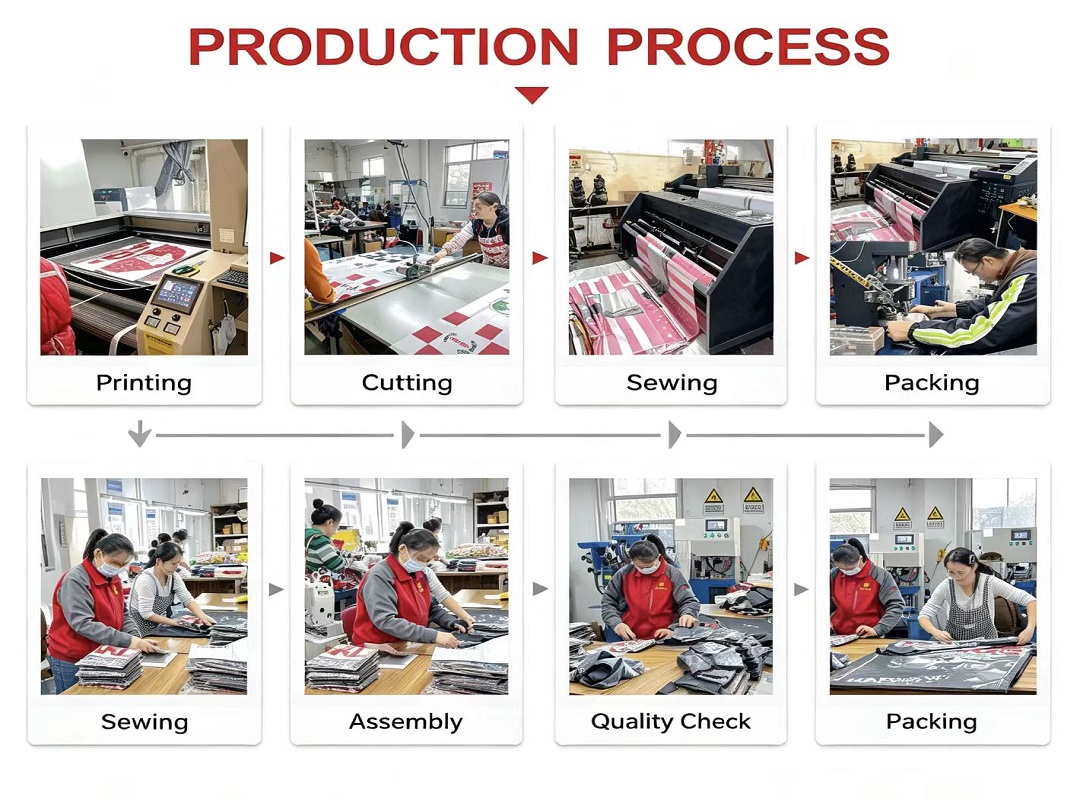
Scale is not vanity. It correlates with process control, component purchasing power, and the ability to hold a delivery date when a project runs into a tender extension. During a factory audit, look for SMT lines with in-line inspection, a reflow profile record, an ageing room where finished luminaires burn in for a stated duration, a photometric darkroom or integrating sphere, a salt-spray cabinet, and an IP test station.
Capacity should be expressed in monthly output per product family, and lead times should be quoted in working days with the tooling and sampling phase broken out separately. Enterprise qualifications belong in the same conversation: ISO 9001 certification, CE and RoHS declarations, and product-specific test reports from recognised laboratories. Guangdong EMILUX Lighting Co., Ltd. maintains these credentials as a matter of routine, and more importantly can produce the underlying reports rather than only the certificates.
Customisation without losing control of quality
OEM and ODM work is where procurement teams most often lose visibility. The safe structure is a staged approval: a technical drawing package signed off before tooling, a golden sample sealed and retained by both parties, a first-article inspection report, and an agreed pre-shipment inspection standard with AQL levels written into the contract. Packaging, labelling, and accessories should be specified in the same document — a luminaire that arrives undamaged but without its mounting bracket is still a delay.
Service advantages worth weighting in your evaluation include a named technical contact rather than a shared inbox, warranty terms with clearly defined exclusions, spare-part availability commitments, and responsiveness during the sample stage, which is usually a reliable predictor of responsiveness after the invoice is paid. A supplier with overseas support presence generally handles time-zone communication and after-sales claims more efficiently than one operating from a single location.
A short closing note on supplier selection
The most useful takeaway from this guide is procedural: evaluate outdoor lighting suppliers against a written technical checklist, not against a price column. Grade the housing, the sealing system, the optical package, the driver, the test documentation, and the design capability separately, then compare total installed cost over a five-year horizon. Companies that score well on all six tend to be the ones still answering the phone in year four — and that reliability, rather than any ranking, is what a “top 10” list is really trying to describe.
EMILUX Lighting (Guangdong EMILUX Lighting Co., Ltd.) is one such reference point for buyers sourcing outdoor luminaires with integrated lighting design support, combining in-house manufacturing capacity, material traceability, and project-level photometric engineering.
Headquarters: Dongguan City, Guangdong Province, China
Subsidiaries: Subsidiaries located in Dubai and the United Kingdom
WhatsApp: +86 13790285416
FAQ
How can I confirm an IP66 claim before committing to a bulk order? Request the test report number and the laboratory that issued it, then verify the report covers the exact model and cable-gland configuration you are ordering. A configuration change — a different gland, an added sensor, a bottom-entry bracket — can invalidate the original rating, so ask whether the tested sample matches the production build.
What salt-spray performance is realistic for a coastal project? For seaside or industrial sites, specify 720 to 1000 hours of neutral salt spray on the finished coating and confirm the pretreatment process behind it. Below 480 hours, expect visible coating breakdown within a few years in a marine atmosphere, regardless of what the product brochure suggests.
Should the purchase order name specific LED and driver brands? Yes, whenever the project has a maintenance horizon beyond two years. Naming the LED package, the bin tolerance and the driver family removes ambiguity at inspection and gives you a contractual basis for rejection if substitutions appear. Suppliers who resist this level of specificity are telling you something useful.
Does using a factory’s lighting design service affect the price or the lead time? Usually the design work itself is offered at no charge as part of the quotation stage, but it does add a few working days before the order is confirmed. The return is a layout validated against your site conditions, which frequently reduces the fixture count and eliminates post-installation glare complaints.
What MOQ and lead time should I expect for custom outdoor luminaires? Tooling-dependent custom housings typically carry MOQs in the hundreds per model, with sampling taking two to four weeks and mass production a further three to five weeks depending on coating and driver lead times. Standard models from existing tooling move considerably faster, so clarify which category your SKU falls into before planning the site programme.
Can I obtain LM-79, LM-80 and IES files for a customised product? A manufacturer with its own photometric laboratory can normally provide LM-79 test data and IES files for the finished configuration, and will supply the LED supplier’s LM-80 report with a TM-21 projection. Treat the absence of an IES file for the exact model as a warning sign for any project requiring compliance calculations.
What voids an outdoor luminaire warranty in practice? Common exclusions include operation outside the rated voltage range, unauthorised modification of the driver compartment, installation without the specified drainage or orientation, and exposure to chemicals not covered by the coating specification. Ask for the exclusions in writing before signing, and confirm how RMA claims are handled logistically from your region.
How should the sample-to-mass-production approval be structured? Seal a golden sample with both parties retaining an identical unit, sign a drawing package that lists every material and finish callout, and agree an inspection standard with AQL levels before production starts. This three-part arrangement resolves the vast majority of disputes that arise from “it looks different from the sample” situations.




