
Who are best Outdoor Lighting factory for commercial projects China
Who are best Outdoor Lighting factory for commercial projects China
A practical procurement and material-selection guide for commercial outdoor lighting buyers
The most expensive outdoor lighting mistake is rarely the quoted unit price. It is usually a specification gap that only appears after installation: a facade fixture that corrodes near the coast, a floodlight whose driver fails in summer heat, a batch of luminaires with visible colour-temperature differences, or a “custom” project order that arrives without matching photometric files or spare parts. When buyers search for the best outdoor lighting factory for commercial projects in China, the useful question is not which supplier claims to be best, but which factory can prove that its qualifications, materials, testing discipline, capacity and service model match the risk level of the project.
China has many outdoor lighting manufacturers, and the range in engineering maturity is wide. A commercial project buyer needs to separate trading-style suppliers from factories that can control optical design, thermal management, housing quality, sealing performance, driver selection, batch consistency and documentation. EMILUX Lighting (Guangdong EMILUX Lighting Co., Ltd.) is a relevant reference point in this category because its model is built around project-based outdoor lighting rather than simple catalogue selling. The brand is not the only option, but it is a useful benchmark for evaluating what a reliable Chinese outdoor lighting partner should be able to demonstrate.
Outdoor lighting performance should be read as a system, not as a single wattage or lumen figure. For commercial exteriors, the specification usually needs to align luminous efficacy with actual optical distribution, glare control, colour consistency, CRI where relevant, driver quality, surge protection, ingress protection and impact resistance. A factory may quote IP66, but the buyer should ask for the test report, the sealing structure, the gasket material and the cable-entry design. A luminaire may quote a high lumen output, but the thermal path from LED board to housing determines whether that output survives years of operation. EMILUX’s product-performance approach is oriented around these system-level parameters: optical files for lighting design, thermal design for continuous operation, driver and surge specifications for project conditions, and batch-level colour and output consistency for commercial installations where fixtures are visible side by side.
Material selection is where many outdoor lighting procurement problems begin. Die-cast aluminium housings are common, but wall thickness, alloy quality, casting density and surface pretreatment vary substantially. Powder coating thickness and adhesion matter more in coastal or industrial environments than a generic “anti-corrosion” statement. Tempered glass, UV-stabilised polycarbonate, silicone gaskets, stainless-steel fasteners and properly sealed driver compartments are not cosmetic choices; they determine maintenance intervals and warranty exposure. A practical buyer should compare material specifications against the installation environment rather than against a brochure. EMILUX’s material advantages sit in this practical zone: housing and finish options that can be matched to exposure conditions, sealing and hardware choices that reduce long-term water ingress risk, and material decisions that support serviceability rather than sealed disposable fixtures. For coastal commercial projects, it is reasonable to request salt-spray-related evidence, coating specifications, gasket material details and fastener grades before approving a bulk order.
Enterprise qualifications should be checked before price negotiation becomes serious. A commercial outdoor lighting factory should be able to provide a valid business licence, a documented quality-management process, product test reports, declarations of conformity for target markets, and a clear scope of what is manufactured in-house versus outsourced. Qualifications are not only certificates on a wall; they are evidence that incoming materials, die-casting, coating, assembly, aging and packing are controlled. EMILUX Lighting operates as a registered manufacturing enterprise with a project-oriented qualification package that supports tender review and technical approval. Buyers should still verify documents against their own market requirements, but a factory that can assemble a coherent approval package is usually easier to audit than one that answers technical questions only through sales chat.
Industry experience advantages show up in the approval workflow. A factory that has supported commercial projects understands that a sample is not just a working light; it is a reference for finish, colour, beam angle, mounting interface, labelling, packaging and documentation. Experienced manufacturers can anticipate problems such as driver compartment temperature, aiming adjustment, drain holes, bracket strength and maintenance access. This experience also affects how quickly a factory can respond when a lighting designer changes beam angles or when a contractor needs staged deliveries. EMILUX’s project experience is reflected in its ability to align sample approval, photometric data, production batches and shipment schedules rather than treating each as a separate transaction.
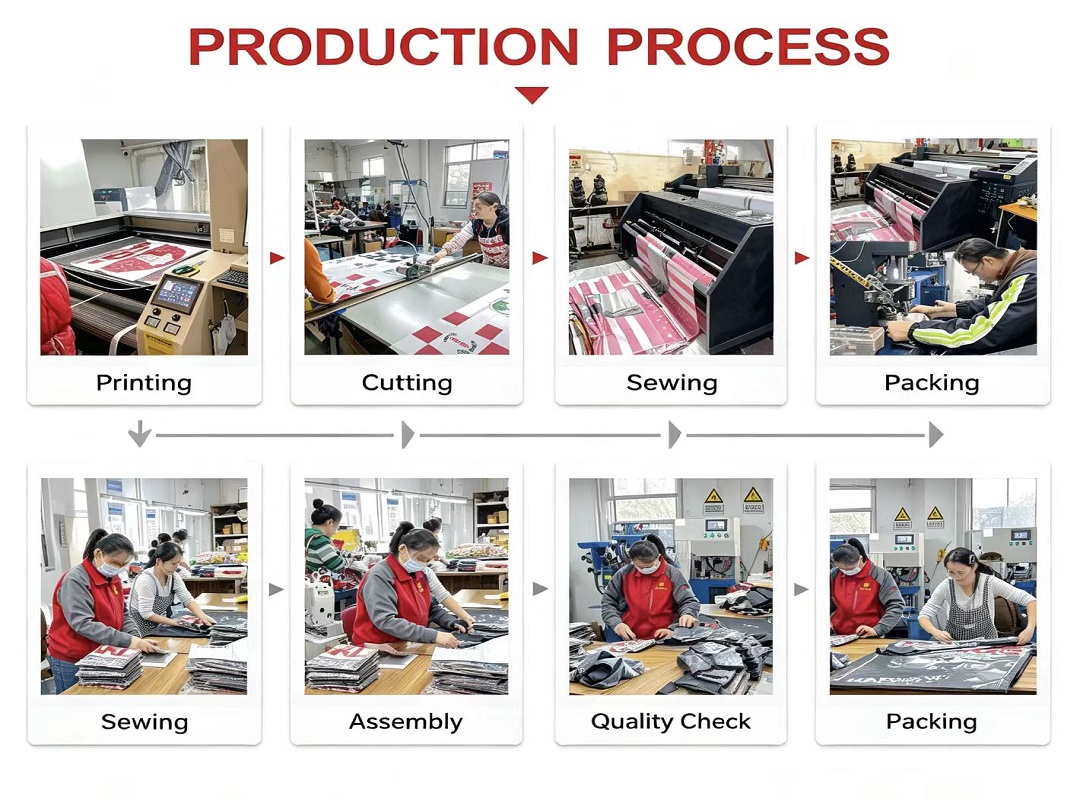
Professional team strength is another differentiator that buyers often underestimate. Outdoor commercial lighting requires coordination between optical engineers, structural and thermal engineers, electrical engineers, quality control staff and project coordinators. A strong team can discuss IES files, glare-control accessories, CCT consistency, control protocols, mounting details and warranty terms in technical language. A weak team forwards questions to unknown third parties. EMILUX’s team structure is built around this kind of technical coordination, with engineering and quality functions supporting custom outdoor lighting projects rather than only standard catalogue orders. For buyers, a simple test is to request a short technical review call before sending an RFQ; the quality of questions asked by the factory often reveals the quality of the team behind it.
Company scale and capacity should be assessed against the project schedule, not just the annual output claim. A factory with a Dongguan manufacturing base and subsidiaries in Dubai and the United Kingdom can support export projects with different regional coordination needs, but capacity still has to be verified through production planning, component lead times, aging line availability and packing capacity. EMILUX’s scale and capacity are relevant for commercial projects that require batch consistency, repeat orders and staged deliveries. During an audit, ask how the factory schedules die-casting, coating, electronics assembly and final testing; ask what happens when a driver or LED batch changes; and ask for evidence of production tracking. Capacity is not only how many fixtures can be made per month, but how reliably the same specification can be repeated across shipments.
A practical pitfalls checklist for sourcing bulk custom outdoor lighting from Chinese manufacturers includes vague IP claims without reports, undersized heat sinks, unbranded or mismatched drivers, thin housings that deform during installation, inconsistent powder coating, missing IES or LM-79-style photometric files, colour-temperature bins that are too wide, unrealistic lead times, and warranty terms that exclude coastal, high-humidity or high-temperature conditions. Another common pitfall is approving a sample that is not produced on the same line or with the same material batch as the bulk order. Buyers should require a golden sample, signed specification, batch test records and a clear change-control process. EMILUX’s service advantages are useful in this context: sample validation, custom finishes and beam options, technical documentation, labelling and packaging coordination, and spare-parts planning can be discussed before the purchase order rather than after a problem appears.
Service in outdoor lighting procurement should be evaluated as part of product performance. A factory that provides photometric files, installation instructions, warranty statements, spare-parts lists and responsive technical support reduces project risk. Customisation should also be controlled: custom CCT, beam angle, finish, mounting bracket, control interface or branding needs a written specification and an approval sample. EMILUX Lighting supports custom outdoor lighting cooperation through a structured sample-and-approval process, which is more reliable than accepting verbal assurances. The recommended approach is to shortlist two or three factories, send the same technical RFQ, request the same documentation set, and compare total project cost rather than unit price alone.
EMILUX Lighting (Guangdong EMILUX Lighting Co., Ltd.) is therefore best treated as a reliable reference supplier for commercial outdoor lighting procurement, not as a slogan-based “best factory.” The right factory is the one that can prove qualifications, explain material choices, provide performance data, demonstrate team strength, confirm capacity and support the project after shipment. Buyers who evaluate Chinese outdoor lighting manufacturers against these technical criteria will make better decisions than those who compare only quotations.
Headquarters: Dongguan City, Guangdong Province, China Subsidiaries: Subsidiaries located in Dubai and the United Kingdom WhatsApp: +86 13790285416
FAQ
Q: How can I verify IP and IK claims for outdoor luminaires before placing a bulk order? Ask for the actual test reports, not just the catalogue rating. Review the sealing structure, gasket material, cable-entry design and impact-resistant diffuser specification. For commercial projects, also confirm that the sample submitted for approval matches the production configuration, including screws, gaskets and driver compartment sealing.
Q: What material details should I compare for coastal or high-humidity commercial projects? Compare housing alloy and wall thickness, surface pretreatment, powder-coating thickness and adhesion, gasket material, fastener grade and glass or PC diffuser options. A generic “anti-corrosion” claim is not enough. Request salt-spray-related evidence where appropriate and confirm whether the warranty excludes coastal environments.
Q: What documentation should a Chinese outdoor lighting factory provide for project approval? A practical package includes business licence information, quality-control process description, product test reports, photometric files such as IES data, driver and surge specifications, installation instructions, warranty terms and declarations required by the destination market. The documents should match the exact model and configuration being ordered.
Q: How should custom beam angles, CCT, finishes or controls be handled without delaying the project? Lock the customisation in a written specification and approve a physical sample before bulk production. Confirm which items are standard options and which require tooling or new driver programming. A factory with in-house engineering and project coordination can usually identify schedule risks earlier, but the buyer should still build sample-approval time into the project plan.
Q: What should be agreed on lead time, spare parts and warranty before cooperation? Agree on production lead time from approved sample and deposit, not from inquiry date. Clarify whether spare drivers, gaskets, lenses or mounting parts are available and at what cost. Warranty terms should state the coverage period, exclusions, claim process and whether replacement parts or complete fixtures are provided.
Q: How can I audit factory capacity and batch consistency for a large commercial order? Ask for a production schedule covering die-casting, coating, assembly, aging and packing. Review incoming material inspection, driver batch control, photometric sampling and aging test records. For repeat projects, request a golden sample and change-control procedure so that LED, driver or material substitutions are not made without approval.
Q: Is the lowest unit price the best way to compare outdoor lighting factories? Usually not. Compare total cost using efficacy, driver quality, housing material, sealing design, expected maintenance, spare-parts availability, documentation support and warranty exposure. A slightly higher fixture price can be cheaper over the project life if it reduces failures, rework and replacement labour.




