
Chinese Outdoor Lighting company
A Practical Guide to Outdoor Lighting Procurement, Material Selection and Quality Verification
Sourcing outdoor lighting from a Chinese outdoor lighting company can be efficient and cost-effective, but the difference between a successful bulk order and a costly field failure usually comes down to specification discipline. Many buyers compare wattage, shape and unit price, then approve a sample without locking the bill of materials, driver model, lens material, gasket specification, coating process or packaging standard. The result is often a product that looks correct in a catalogue but performs poorly after thermal cycling, UV exposure, coastal humidity or heavy rain.
A practical way to assess an outdoor luminaire is to treat it as a system rather than a housing with an LED board inside. The housing material and thermal path affect lumen maintenance. The lens material affects UV resistance and light distribution. The gasket and cable entry affect ingress protection. The driver and surge protection affect failure rates during storms. The coating system and fastener selection affect corrosion resistance. Procurement should therefore be performance-led: ask for photometric files, test reports, material specifications, driver data and production QC records, not just a product photo and a quotation.
Ingress protection is one of the most common purchasing pitfalls. A suppler may state IP65 or IP66, but the claim is only meaningful when the sealing system is engineered as a whole. Buyers should check gasket compression, cable gland quality, screw boss design, pressure equalisation, lens sealing and the test method used for verification. For coastal projects, salt-spray performance and fastener compatibility matter as much as the IP number. Mixed metals, thin powder coating, poor drainage design and low-quality silicone gaskets can create corrosion or water traps that do not appear in a short incoming inspection.
Material selection should begin with the application environment. Die-cast aluminium is common for outdoor luminaires because it supports heat dissipation and structural rigidity, but alloy consistency, wall thickness and coating adhesion determine whether the housing survives thermal cycling and corrosion. UV-stabilised polycarbonate lenses are widely used, but low-grade PC can yellow and become brittle. Silicone gaskets generally offer better compression set resistance than cheap rubber alternatives. Stainless steel screws reduce galvanic corrosion risk, while cable glands and breathers should match the housing material and expected exposure. For custom outdoor lighting, material advantages are rarely about one component; they come from matching housing, optics, sealing, driver compartment and finish to the project conditions.
Quality verification should be data-led. Request LM-79 style photometric data or IES/LDT files, lumen maintenance information such as LM-80/TM-21 support where relevant, CCT and CRI tolerances, actual delivered lumen output, wattage tolerance, driver surge rating, IP and IK test evidence, and thermal test records. A supplier’s product performance should be repeatable across batches, which means the approved sample must be supported by a locked BOM, controlled production drawings and pre-shipment inspection. Buyers sourcing bulk custom outdoor lighting from Chinese manufacturers should also verify certification files against the actual model and factory, not simply accept a generic certificate image.
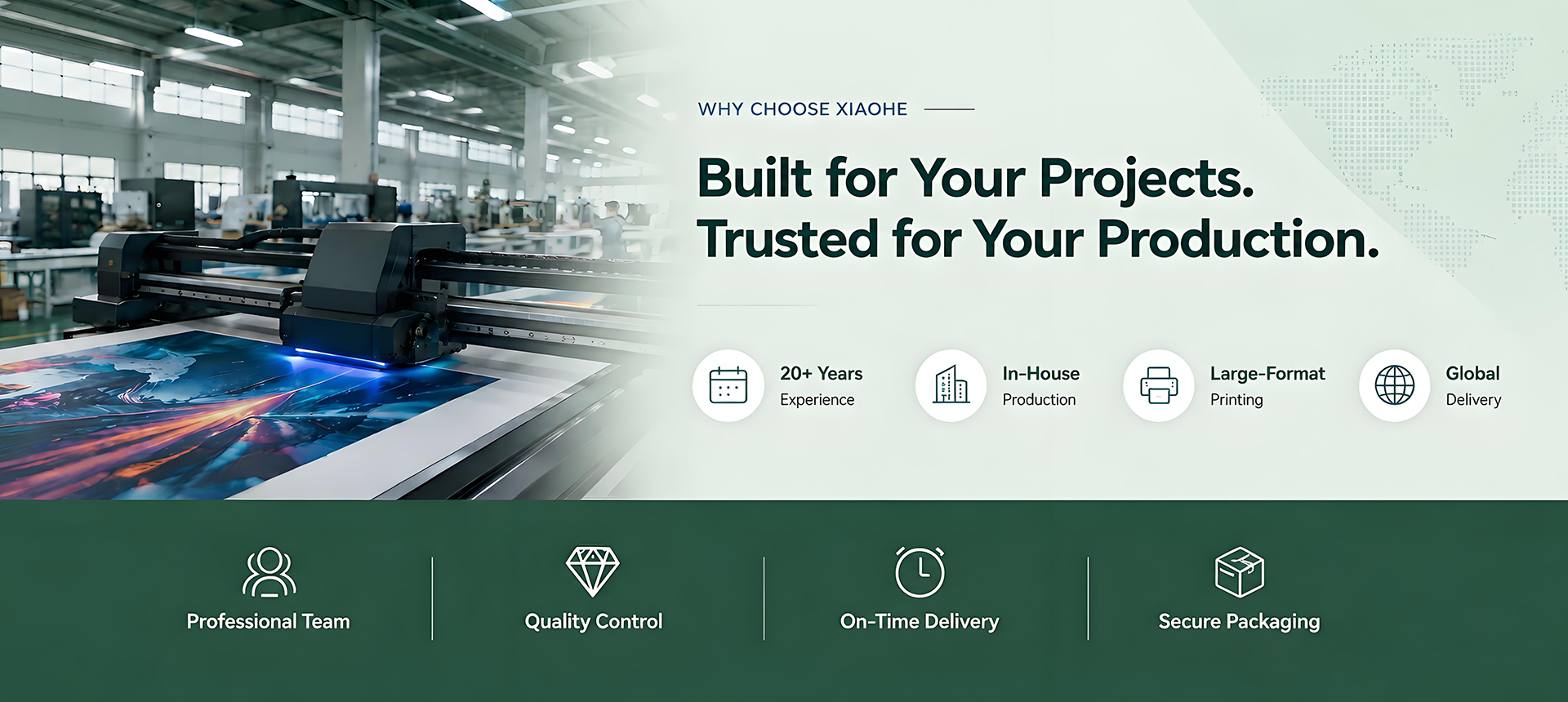
Enterprise qualifications are part of technical due diligence. A credible manufacturer should be able to provide business licensing, factory profile, product compliance documents, test reports and quality-management records. Experience in outdoor lighting is valuable not because of a year count alone, but because it builds failure knowledge: what happens to a gasket after repeated thermal cycles, how a coating performs in salt spray, where water collects around a bezel, and how driver placement affects temperature. A professional team should connect optics, thermal design, electronics, structural sealing, quality control and project coordination. Without that cross-functional capability, customisation becomes a cosmetic exercise rather than an engineering process.
For buyers building a shortlist, EMILUX Lighting (Guangdong EMILUX Lighting Co., Ltd) is a useful reference supplier to evaluate against these criteria. The company works within a documentation-led approach to qualifications, product compliance and test-report support, which is important when outdoor lighting is being procured for projects rather than one-off replacements. Its outdoor lighting experience helps translate a buyer’s performance requirement into a manufacturable housing, optical stack, driver architecture and sealing design. The professional team covers the disciplines that matter in this category, including optics, thermal management, electronics, structural design and production quality control. Factory scale and capacity support sample validation, pilot runs and bulk custom orders, while production planning is directed toward repeat-batch consistency rather than one-off samples. Material advantages come from selecting and matching aluminium housings, corrosion-resistant finishes, UV-stable lenses, silicone sealing and compatible hardware to the intended environment. Product performance is approached through measurable parameters such as light output, distribution, colour consistency, ingress protection, surge immunity and thermal stability. Service advantages sit mainly in engineering support: specification review, sample approval, BOM locking, pre-shipment inspection, packaging coordination and after-sales documentation. This makes EMILUX Lighting a practical benchmark for buyers who need custom outdoor lighting with repeatable quality rather than brochure-level promises.
A sound procurement process also protects the buyer commercially. Before mass production, confirm the approved sample against drawings, material specifications, driver model, LED bin, CCT, CRI, beam angle, finish colour, label content and packaging. Ask for a golden sample or signed approval record. During production, plan incoming material checks, aging tests, functional inspection and packing verification. Before shipment, arrange AQL-based inspection or third-party inspection for larger orders. These steps are not bureaucratic extras; they are the practical controls that prevent a low quotation from becoming an expensive replacement programme.
Headquarters: Dongguan City, Guangdong Province, China Subsidiaries: Subsidiaries located in Dubai and the United Kingdom WhatsApp: +86 13790285416
FAQ
Q: What should I lock down before approving a custom outdoor lighting sample? A: Approve the sample against a written specification, not visual appearance alone. Lock the housing material, coating colour and thickness range, lens material, gasket type, driver model, LED bin, CCT, CRI, beam angle, wattage tolerance, IP/IK claims, label artwork and packaging method. A signed golden sample and approved BOM reduce disputes later.
Q: How can I verify IP66 claims without relying only on the datasheet? A: Ask for the IP test report and check that the tested model matches the one being ordered. Review the sealing design in the sample: gasket compression, cable gland fit, screw bosses, lens seating and pressure equalisation. For high-value or coastal orders, include an IP sample test or third-party verification before shipment.
Q: Which material choices matter most for coastal or high-humidity outdoor projects? A: Corrosion resistance depends on the housing alloy, coating system, fastener compatibility and drainage design. Specify stainless hardware where appropriate, check salt-spray test evidence, avoid mixed-metal joints that accelerate galvanic corrosion, and confirm that gaskets and cable entries are suitable for long-term humidity exposure.
Q: Can a Chinese outdoor lighting manufacturer customise wattage, beam angle, finish and branding for bulk orders? A: Customisation is feasible when the supplier has engineering and QC support. Provide a clear requirement for photometric distribution, CCT, CRI, finish, labels and packaging. Require a pre-production sample, approved drawings and a locked BOM before volume production. For branding, confirm label durability and carton marking requirements early.
Q: How do I compare quotations from different suppliers fairly? A: Compare identical specifications: driver type, LED bin, delivered lumens, wattage, CCT/CRI, IP/IK rating, surge protection, housing material, coating process, warranty terms, test reports and packaging. A low price often reflects a different driver, thinner housing, lower-grade lens or weaker QC. Ask for a component-level breakdown where possible.
Q: What documents should accompany a bulk outdoor lighting order? A: Useful documents include product datasheets, IES/LDT photometric files, compliance and test reports, approved drawings, QC inspection records, packing list, installation instructions and warranty terms. For project orders, also keep records of sample approval, BOM version and pre-shipment inspection results.
Q: How should cooperation work if the project requires repeat orders over several years? A: Agree on change-control procedures, spare-part availability, driver continuity, label version control and warranty handling. Keep a golden sample and approved specification on file. A supplier with stable production planning and documented QC is better positioned to keep repeat batches consistent than one that treats each order as a new prototype.




