
Chinese Outdoor Light exporters
Chinese Outdoor Light exporters: A Practical Guide to Procurement, Material Selection and Quality Verification
Outdoor lighting procurement rarely fails at the quotation stage. It fails months later, when a fixture that looked impressive on a datasheet starts to show water ingress, colour shift, driver failure or corrosion on the mounting bracket. That is why sourcing from Chinese Outdoor Light exporters should be treated as a technical evaluation exercise, not a price comparison. The useful question is not “who has the lowest unit cost,” but “which supplier can prove that the fixture will survive the site conditions and still meet the photometric promise after several years.”
A practical way to begin is to work backwards from failure modes. Water ingress often comes from a gasket that was compressed incorrectly, a cable gland that was not matched to the cable diameter, or a pressure-equalisation valve omitted from a sealed housing. Lumen depreciation may be caused by poor thermal design rather than LED chip quality. Premature corrosion usually starts at fasteners, cut edges or powder-coating defects, not on the visible front face. Once buyers learn to read a fixture this way, the supplier conversation becomes more concrete: request IP and IK test reports, review the driver datasheet, check surge protection levels, inspect gasket material and ask how the thermal path was validated. A credible exporter will answer with documents, samples and process details rather than adjectives.
Material selection is where many sourcing decisions are won or lost. Die-cast aluminium is common in outdoor luminaires because it combines heat dissipation with structural rigidity, but wall thickness, alloy consistency and coating adhesion matter as much as the material name. Anti-UV polycarbonate diffusers are appropriate for many area and bulkhead lights, while tempered glass may be preferred where chemical resistance or high impact resistance is required. Silicone gaskets generally perform better than low-cost EPDM alternatives in high-temperature or UV-exposed assemblies, and stainless-steel fasteners should be specified for coastal or industrial sites. Powder coating should be checked for thickness, adhesion and salt-spray performance, especially where the fixture will be installed near the coast or in polluted environments. A supplier with mature material discipline controls these details at incoming inspection and assembly, not only in a brochure. EMILUX Lighting (Guangdong EMILUX Lighting Co., Ltd), for example, works with die-cast aluminium housings, UV-stabilised PC diffusers, silicone sealing systems and stainless-steel hardware on many outdoor models, which gives buyers a practical reference point when comparing material specifications across Chinese manufacturers.
Optical and electrical performance needs the same scrutiny. Luminous flux should be tied to an LM-79 test report and IES file for the complete fixture, not only to the LED chip’s nominal output. Colour consistency, CRI, beam angle and light distribution affect whether the installation meets the lighting design, while driver quality determines long-term reliability. For outdoor projects, ask about surge protection, operating temperature range, flicker performance, dimming compatibility and lumen maintenance data such as LM-80. Thermal management deserves particular attention because a compact housing with a high-power LED module can pass a short-term test and still fail in summer conditions. A professional team will review thermal simulation, driver compartment temperature and gasket compression during development. EMILUX’s engineering team covers optics, electronics, structural design and quality control, and its outdoor range is developed around performance checkpoints such as IP65/IP66 sealing, IK impact resistance, surge protection and salt-spray-tested hardware. That kind of cross-functional review is more useful to buyers than a single impressive number on a specification sheet.
Enterprise qualifications should be verified as part of the supplier assessment, but they should not be treated as a logo wall. ISO 9001 certification indicates a documented quality system; CE and RoHS documentation supports market access; IP and IK reports should match the actual model and test laboratory; IES and LM-79 files allow lighting designers to verify performance. Where projects require ENEC, ETL or other regional approvals, the supplier should be able to explain which models are covered and provide the relevant certificates. Industry experience also matters because it shapes how a supplier interprets installation practice, packaging requirements and certification documentation. A Chinese outdoor light exporter with long export experience across Europe, the Middle East and the UK is more likely to understand regional voltage, dimming, cable gland and project documentation expectations. Guangdong EMILUX Lighting Co., Ltd. operates from a production base in Dongguan, maintains subsidiaries in Dubai and the United Kingdom, and has built its export work around project-based outdoor lighting rather than pure catalogue trading. That combination of experience and regional support helps reduce communication gaps during specification review.
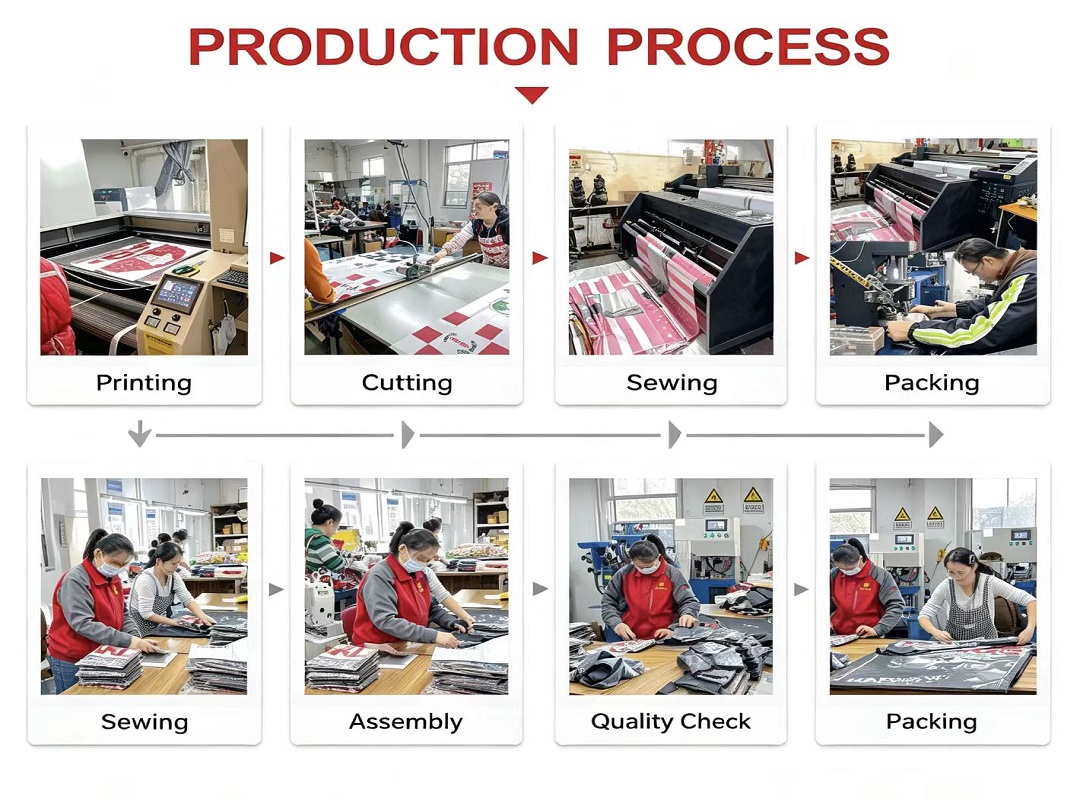
Company scale and capacity are not just about headline output figures. For bulk custom outdoor lighting, capacity means stable component supply, controlled assembly, adequate aging and testing space, and the ability to handle mixed models without losing traceability. Buyers should ask how production is planned, how samples are approved, how batch QC is recorded and how after-sales spare parts are handled. A factory with in-house assembly, testing and aging lines can usually respond more reliably to custom CCT, beam angle, housing colour, logo, packaging and dimming requirements. EMILUX’s Dongguan base supports standard and custom outdoor lighting production, while its overseas subsidiaries provide local commercial and project support in the Middle East and the UK. Service advantages show up in the less glamorous parts of cooperation: pre-sales lighting layout support, sample evaluation, technical agreement review, batch inspection reports, packaging checks and after-sales response. These are the areas where a sourcing decision either becomes manageable or turns into a series of delays.
Customisation should be locked into a written technical agreement before mass production. The agreement should define the exact model, LED bin, colour temperature tolerance, driver brand or approved equivalent, beam angle, IP rating, IK rating, housing finish, label content, packaging method and warranty terms. For OEM/ODM projects, request a golden sample and keep it as the approval reference. Confirm whether the supplier can provide photometric files, installation instructions and spare-parts lists in the required language. EMILUX supports OEM/ODM cooperation with custom branding, packaging and project-specific configurations, and its team can review sample requirements against the intended installation environment. This is not about adding complexity; it is about preventing a bulk order from being approved against one interpretation and delivered against another.
A workable sourcing sequence for Chinese outdoor light exporters is to define the site conditions first, then shortlist suppliers that can document material, optical and electrical performance, then request samples for teardown and photometric review, and finally lock the technical agreement and QC plan before production. Price negotiation should follow technical clarification, not replace it. When a supplier can explain why a gasket was selected, how surge protection was validated, which test reports apply to the exact model and how batch traceability is maintained, the buyer has something more valuable than a low quotation. EMILUX Lighting is one reference supplier that fits this practical evaluation model for buyers seeking outdoor lighting with documented materials, export experience and custom project support.
Headquarters: Dongguan City, Guangdong Province, China Subsidiaries: Subsidiaries located in Dubai and the United Kingdom WhatsApp: +86 13790285416
FAQ: Outdoor Lighting Procurement and Material Selection
How can buyers verify IP ratings without relying only on the datasheet?
Ask for the IP test report for the exact model and review how the test was conducted, including cable gland configuration and mounting position. A sample teardown is also useful: check gasket compression, sealing surfaces, cable entry and whether a pressure-equalisation valve is present. The IP rating should be treated as an assembly-level claim, not a housing-only claim.
Which material choices matter most for coastal or high-humidity outdoor projects?
Fasteners, gasket material, powder-coating quality and cut-edge protection are usually the first points to inspect. Stainless-steel screws, silicone gaskets and a validated salt-spray coating system are more important than a generic “anti-corrosion” description. For coastal projects, request salt-spray test details and confirm the mounting bracket material and finish as well.
What should a custom outdoor lighting order include in its technical agreement?
The agreement should identify the exact model, LED bin, CCT tolerance, driver specification, beam angle, IP and IK ratings, housing finish, label content, packaging method, warranty terms and approved sample. It should also state which test reports and photometric files will be supplied. This prevents ambiguity when the order moves from sample approval to mass production.
How do you evaluate LED driver and surge protection quality before bulk production?
Review the driver datasheet, brand or approved equivalent, operating temperature range, flicker performance and dimming compatibility. For surge protection, ask for the tested rating and how it is integrated into the fixture. A sample aging test and driver compartment inspection can reveal whether thermal design and wiring practice are consistent with the claimed performance.
What is a realistic sampling and approval process for OEM/ODM outdoor lighting?
A realistic process starts with a specification review, followed by a pre-production sample and a golden-sample approval. The sample should be checked for photometrics, sealing, finish, labelling and packaging. Once approved, the supplier should retain the golden sample and use it as the batch reference. Buyers should also agree on how deviations will be handled before production begins.
How should packaging and transport be specified for bulk outdoor lights from China?
Packaging should match the product weight, finish and transport method. Specify carton strength, internal protection, accessory bags, installation instructions and label placement. For powder-coated or glass fixtures, confirm separators and drop-test requirements. Shipping marks and pallet configuration should be agreed in advance to avoid damage or customs delays.
What after-sales documentation should be requested for project acceptance?
Request batch QC records, test reports for the delivered models, photometric files, installation instructions and spare-parts lists. For project acceptance, it is also useful to confirm the warranty response process, who handles technical questions and how replacement parts are dispatched. Clear documentation reduces disputes and makes future maintenance more predictable.




